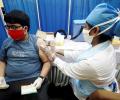
The cost of not vaccinating the entire population quickly will be far higher than bearing the entire cost of vaccination, points out Prosenjit Datta.
The Reserve Bank is likely to maintain status quo on interest rates in its forthcoming monetary policy review but may change the stance in view of retail inflation piercing its upper tolerance limit, global uncertainties created by the ongoing Russia-Ukraine war, and the urgency to protect and boost growth, feel experts. The RBI governor-headed rate setting panel -- Monetary Policy Committee (MPC) -- will be holding its first meeting of the 2022-23 fiscal from April 6 to 8. The outcome will be announced on April 8.

Bajaj Finance was the top laggard in the Sensex pack, tanking up to 8 per cent, followed by M&M, Tata Steel, Bajaj Auto, ONGC, HDFC Bank and Kotak Bank. On the other hand, TCS, Tech Mahindra, HUL, Axis Bank and ITC were the top gainers.

'We are looking at the Budget with the hope that it will address all issues even at the cost of exceeding the fiscal deficit target.'

East India, along with a major portion of central India, is likely to be at a higher risk of being rain deficient, especially during the first half of the season.
'Growth would have to be 7% in the October-March period, if the year as a whole is to clock 6%.' 'Who would bet on that when, in the world of real numbers, both exports and imports have continued to fall, car sales have continued to slump, and the industrial production index shows yet again a drop in output?', asks T N Ninan.

The government's programmes should be expected to generate some momentum, but the macro-economic numbers are not encouraging, observes T N Ninan.

GST rate cut for real-estate, income transfer scheme, farm loan waivers execution and recapitalisation of PSU banks have the potential to boost India's growth in a few months, says Neelkanth Mishra.

'We forecast real GDP growth to moderate to 6.7 per cent in the year ending March 2018.' 'However, as disruption fades, we expect to see a rebound in real GDP growth to 7.5 per cent in the next fiscal year.'

The economy has shown sharp resilience in the past and has also bounced back in good time. We could hence expect a similar trajectory next year, observes Madan Sabnavis, chief economist, CARE Ratings.

India needs sustained GDP growth of 9-10 percent - Jaitley

Credit Suisse in a research note said that 'we have cut our 2013/14 year average GDP growth forecast to 6 per cent from 6.5 per cent, while also lowering our 2014/15 projection by half percentage points to 7 per cent'.

Moody's Investors Service on Friday said India's economy is expected to contract for the first time in more than four decades saying economic damage owing to the coronavirus-induced lockdown will be significant with lower consumption and sluggish business activity. Even before the coronavirus outbreak, Indian economy already was growing at its slowest pace in six years and with the stimulus measures announced by the government falling short of expectations, the disruptions are likely to be greater. "We now expect India's growth to register a real GDP contraction for the fiscal year ending in March 2021 (fiscal 2020-21), from our earlier projection of zero growth," it said in a research note.

Goldman Sachs forecasts real GDP growth to accelerate to 7.9 per cent in FY17 from a projected 7.5 per cent in FY16.

Tata Steel was the top loser in the Sensex pack, shedding 3.01 per cent, followed by M&M, Maruti, Asian Paints, PowerGrid, ITC and Axis Bank.

In December, govt had lowered its growth forecast for 2015-16 to 7-7.5%

While the US-Iran conflict leading to a spike in global oil prices and trade war between the US and the EU topped the chart with 25 per cent, other major risks to the global economy include coronavirus, debt burdens causing a recess across emerging markets and Hong Kong protests causing an exodus from Asia's biggest financial centre.

Armed with necessary macro and micro growth drivers, India is on its way to becoming the fastest growing major economy in the world, a finance ministry report said. Rapid vaccination and teeming festivities will push India's ongoing recovery resulting in narrowing of demand-supply mismatches and greater employment opportunities, as per the monthly Economic Review prepared by the ministry.
'We have to stop thinking about GDP and look at the impact on output and unemployment.' 'And that is not going to be insignificant.'

The S&P BSE Sensex plunged 461 points to end at 25,603.

On the rupee, it expects some appreciation pressure on in the near term from greater portfolio flows.

Amid uncertainties arising out of the second wave of COVID-19, the Reserve Bank on Thursday said that a durable revival of private consumption and investment would be critical for sustaining economic growth post-pandemic. Observing that 2020-21 has left a scar on the economy, RBI in its annual report said, "in the midst of the second wave as 2021-22 commences, pervasive despair is being lifted by cautious optimism built up by vaccination drives." The second wave of the pandemic has prompted revision of growth projections for the current fiscal and the consensus appears to be gravitating towards RBI's forecast of 10.5 per cent, the report added.

The global brokerage firm further said that BoP would be INR-supportive.

While the forecast was still lower than what we have been recording over the last few years, it instilled a false sense of comfort that India might still weather the storm better than many other countries.

Concerned by GDP slowdown and unrealistic tax targets, the economists urged Finance Minister Nirmala Sitharaman to implement long-term structural steps like land and labour reforms. Warning against any off-Budget financing the economists said the government should prepare a statement of intent for its social, rural and welfare sector expenditure.

India is in favourable position to attract foreign firms planning to relocate their manufacturing bases due to trade tension between the US and China, says Nomura.

Hailstorms may cause Rs 12k-cr crop damage, El Nino a bigger worry.

The next round of bad news could come from Europe, where banks in a number of economies such as Italy, Portugal and Greece are sitting on mountains of bad loans.
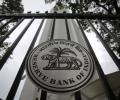
The Reserve Bank of India on Friday decided to keep the benchmark interest rate unchanged at 4 per cent but maintained an accommodative stance as the economy is yet to recover from the impact of the second Covid wave.

Projecting acceleration in India's GDP growth to 9% for FY 2011-012, Economic Advisory Council to Prime Minister seeks measure to address serious supply bottlenecks.
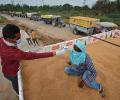
The World Bank on Tuesday projected India's economy to grow at 8.3 per cent in 2021 and 7.5 per cent in 2022, even as its recovery is being hampered by an unprecedented second wave of the COVID-19, the largest outbreak in the world since the beginning of the deadly pandemic. The Washington-based global lender, in its latest issue of Global Economic Prospects released here, noted that in India, an enormous second COVID-19 wave is undermining the sharper-than-expected rebound in activity seen during the second half of Fiscal Year 2020/21, especially in services.

Concerns are swirling that Japan's dream of hosting the Tokyo 2020 Olympics could be a fatality of the spread of the new coronavirus, jolting organisers, sponsors, and media firms who have spent billions of dollars in the run-up to the event. Global insurers face a hefty bill if the coronavirus forces the cancellation of the Games, with estimates of the cost of insuring the showpiece running into billions of dollars.

'RBI is already late in addressing inflation pressures.'

In view of India's faster industrial growth and improved business confidence, UK-based Standard Chartered Bank (SCB) on Tuesday revised upwards its forecast for the country's economic growth to 8.1 per cent for the current fiscal.

The IMD attributed the projection to a weakening of El Nio and the Indian Ocean Dipole turning positive.

Ad spends to revive in 2018; India likely to add Rs 47,028 crore in the next five years

India's macroeconomic situation is improving fast and the country's GDP growth will turn positive in the third and fourth quarters of the current financial year, eminent economist Ashima Goyal said on Sunday. Goyal in an interview to PTI said the management of the COVID-19 pandemic and gradual unlocks announced by the government have helped in avoiding multiple COVID-19 peaks. The growth estimates by different agencies are being continuously revised, she said.

Given the various risks to growth, one could argue for rate cuts to be deeper than the 5 per cent terminal repo rate that we are projecting at this stage, says Kaushik Das.
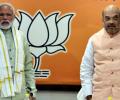
Corporate leaders said a stable government at the Centre will help boost infrastructure spend, address agricultural distress, and encouraging employment.

UBS, Credit Suisse see emerging markets doing well next year, but expect India to underperform, given its rich valuations.
